


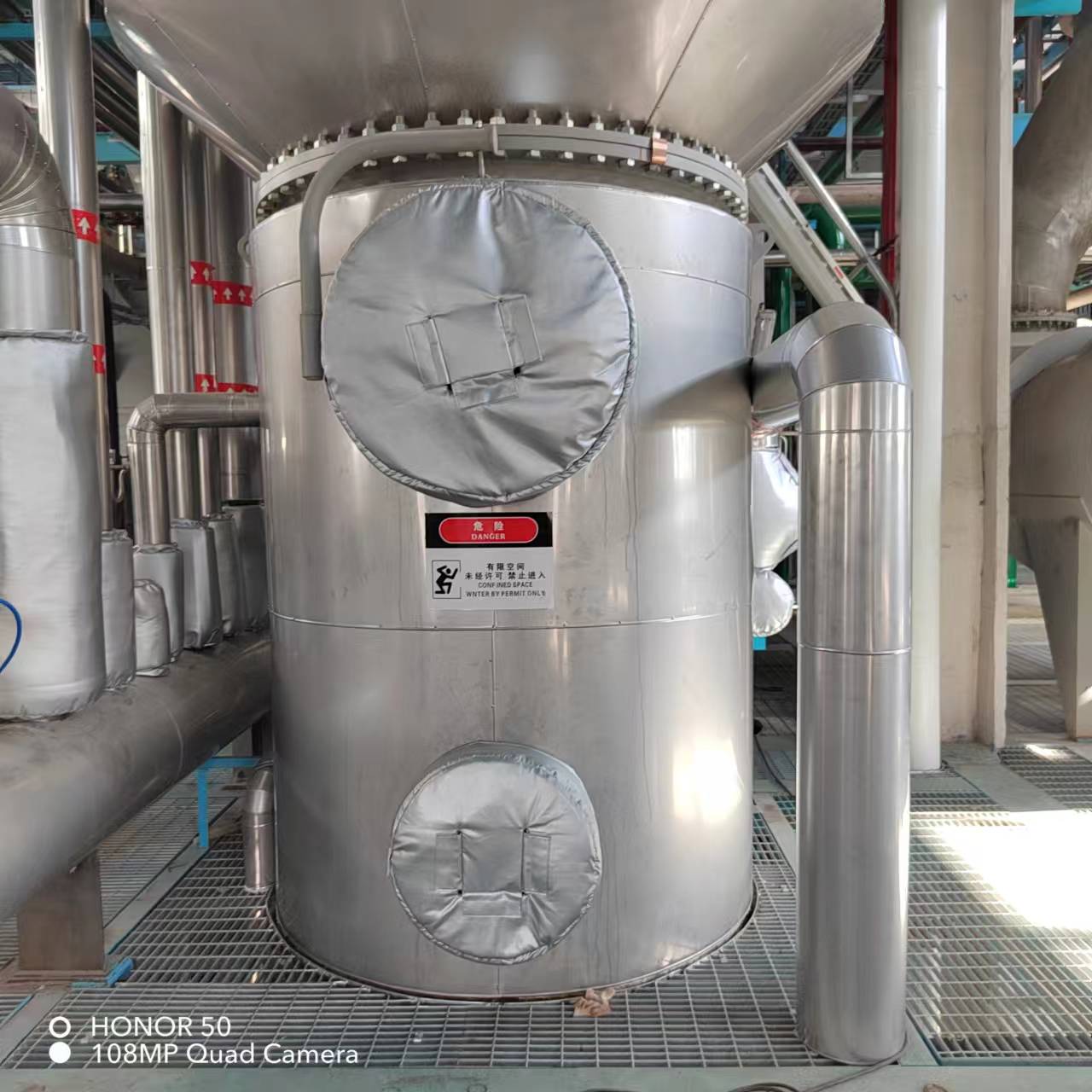
How will the installation of Nano Insulation Clothing change things?
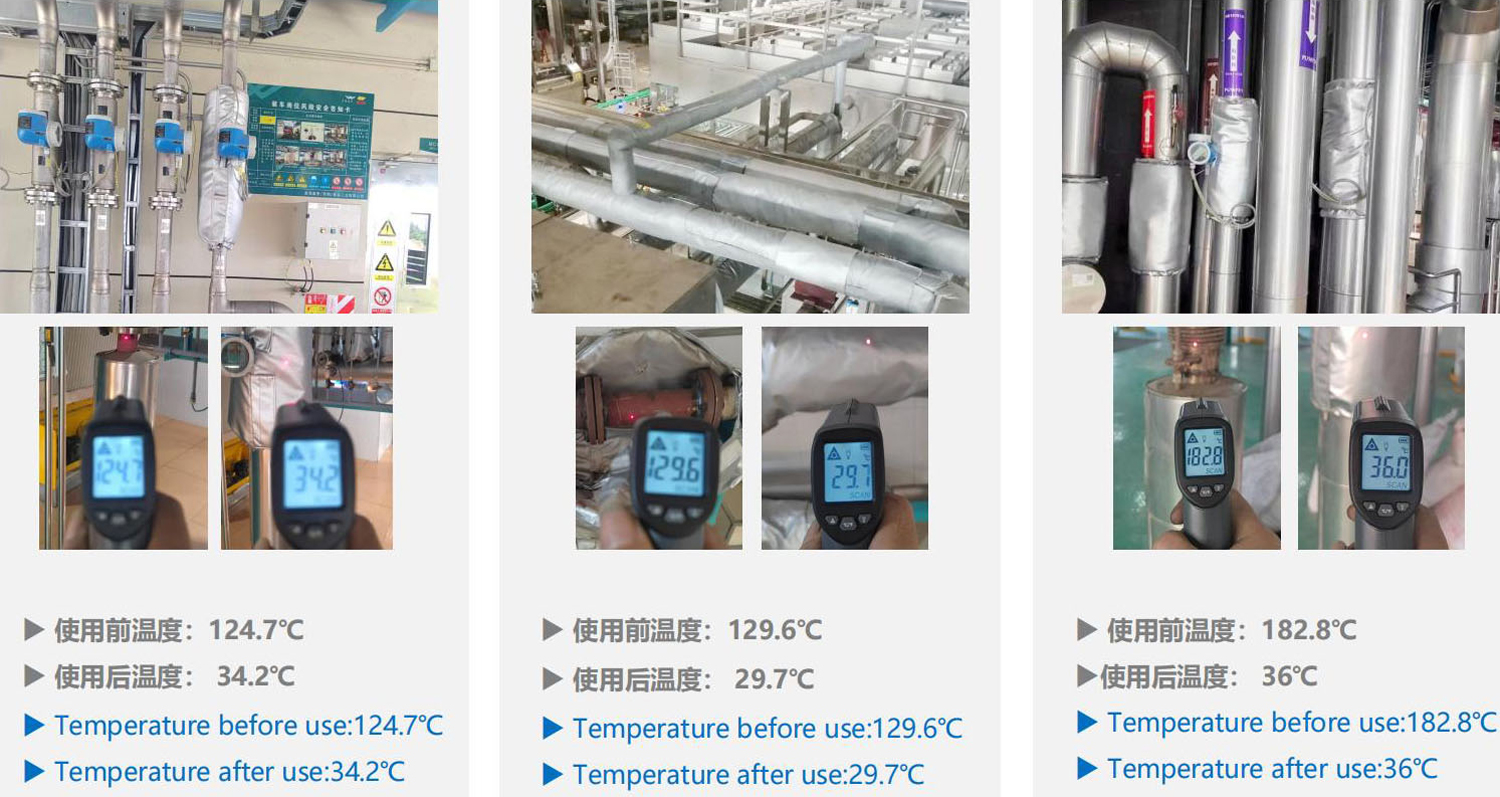
Monitoring exterior temperature changes before and after transformation
Select some monitoring points for energy-saving Thermal Insulation transformation of thermal equipment and pipelines, and measure the exterior temperature of the monitoring points before and after the transformation. After completing the insulation and energy-saving transformation, the appearance temperature of the equipment is in full compliance with the relevant standards, and the heat insulation and energy-saving effect of the heat equipment and pipelines has been significantly improved to achieve the insulation and energy-saving requirements.
?

?
Before the shut-off valve is not insulated, the surface temperature is 371 Fahrenheit, which is equivalent to 188.44 Celsius, as detected by an imager.
?

?
After the shut-off valve was insulated and operated for 10 days, the surface temperature was 119 Fahrenheit, which is equivalent to 48.3 Celsius, as detected by an imager.
Comparison of heat loss before and after modification
The use of q (W/m2) indicates that the heat flow temperature, the amount of heat dissipation generated by the area is the heat loss and the product of the area, and the area of the thermal insulation condition has a great relationship with the detection of thermal equipment and pipeline thermal insulation effect, the index is the main indicator of the effect of the inspection of thermal equipment and pipeline. It gives the maximum value of heat loss allowed for thermal equipment and pipelines under different medium temperatures.
q=a×(TW-TF)
q indicates the heat loss/heat flow density, (W/m2) cylindrical wall pipeline surface heat transfer system a=9.42+0.05×(TW-TF)W/(m2-K); TW indicates the exterior temperature of the Insulation Structure; TF indicates the ambient temperature.
?
?
After installing the insulation sleeve, the temperature change of the object will usually be slowed down, which is shown in the following cases:
For high-temperature objects: such as running industrial equipment, high-temperature pipelines, etc., the Thermal Insulation Sleeve can reduce the heat loss to the surrounding environment. Because the thermal insulation sleeve has low thermal conductivity, can hinder the heat by conduction and convection to the outside world, so that the object's temperature drop rate is significantly slowed down, so as to maintain a higher temperature, reduce heat loss, and improve the efficiency of energy use.
For low-temperature objects: like low-temperature storage tanks, cold chain transport of goods, etc., the thermal Insulation Jacket can prevent the outside heat transfer. This can keep the low-temperature objects at a lower temperature, reduce the loss of cold, and prevent their temperature from rising too quickly and affecting the quality of the goods, for example, preventing food in the cold chain from deteriorating due to the rise in temperature.
For objects or environments where the temperature needs to be kept stable: for example, some laboratory equipment and electronic instruments with high requirements for temperature accuracy, the thermal insulation jacket helps to maintain the stability of its temperature. It can reduce the impact of external environmental temperature fluctuations on the object, so that the temperature of the object within a certain range to maintain a relatively constant, in favour of the normal operation of the equipment and the accuracy of the experimental results.